
Kensington and Chelsea's plan to 2030 keeps twice-weekly bins, adds 50 CCTV cameras and a Lots Road park, with £120m less than it needs to spend.
Kensington and Chelsea Council has published its plan for the next four years, and it is written around one hard number: the council expects to have more than £120 million less than it needs between now and 2030. The plan keeps twice-weekly bin collections, promises 50 new CCTV cameras and a public park at Lots Road, and says council tax rises will be “a last resort” (Council Plan 2026 to 2030).
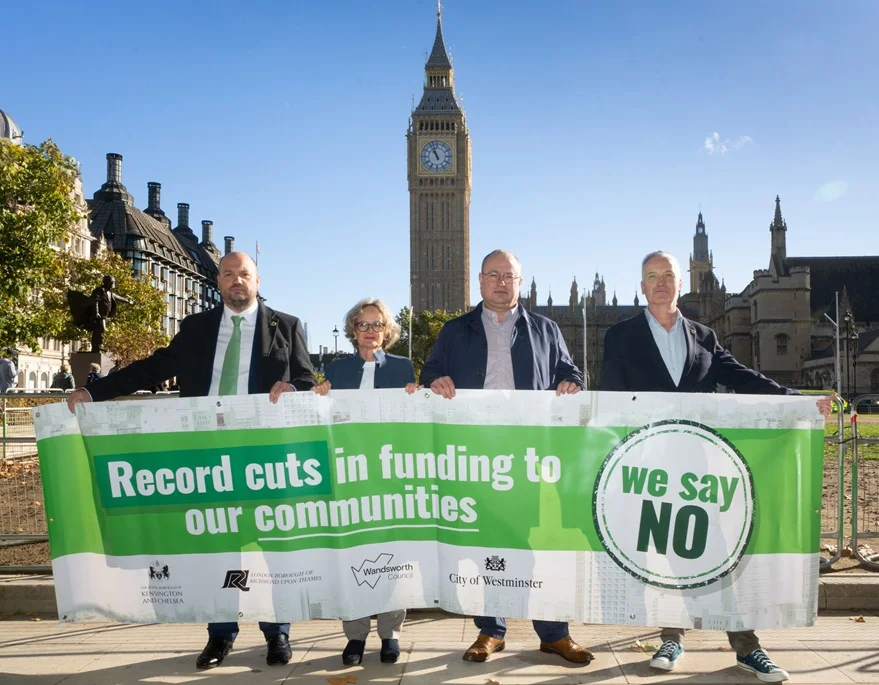
The council launched the plan on Thursday 22 October, the same day its leader, Cllr Elizabeth Campbell, took the borough’s appeal against Government funding changes to Whitehall (RBKC newsroom, 22 October).
Four priorities
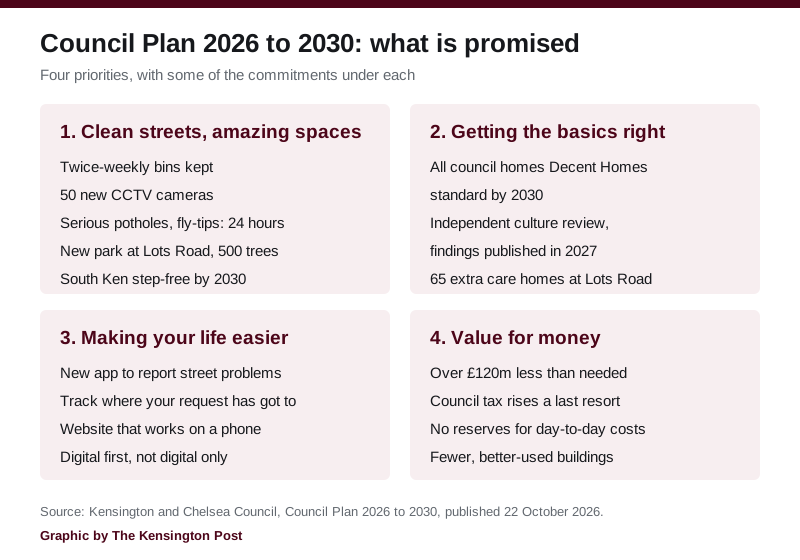
The plan is built around four headings, which the council says reflect both what it was elected on and what residents told it mattered most:
- clean streets and amazing spaces
- getting the basics right
- making your life easier
- value for money
They came out of the Let’s Talk K&C2030 consultation, which ran for six weeks earlier this year and heard from almost 600 people, the council said. Residents told it they valued the parks, clean streets, local shops, markets and restaurants, and wanted it to go further on transport and traffic, community safety and anti-social behaviour, and on running its own services better.
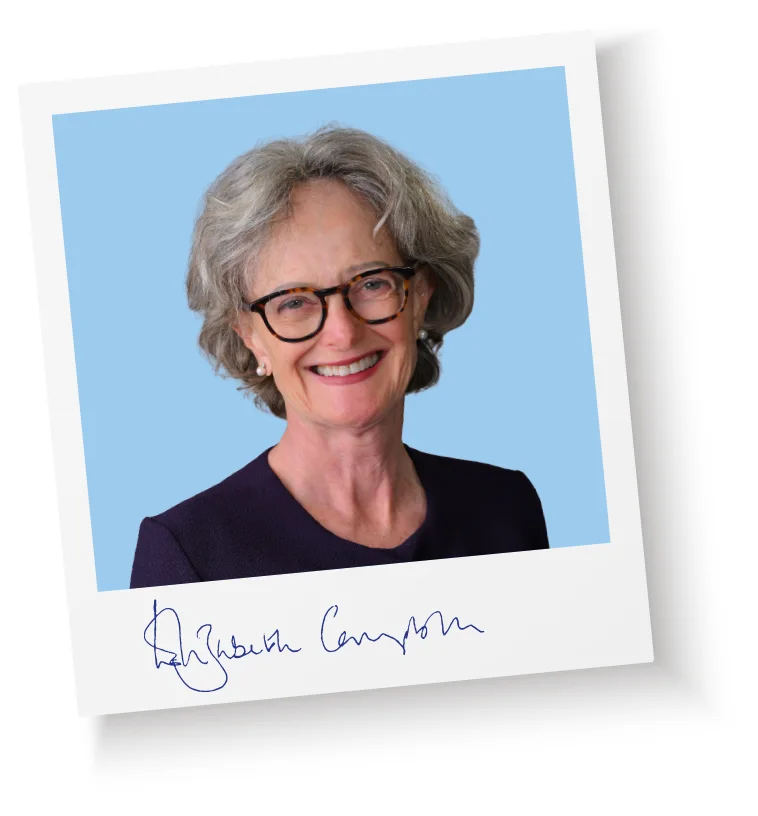
Cllr Campbell said:
“Residents have been clear about what they want from their Council. They want us to focus on the things that make the biggest difference to their daily lives, clean streets, parks and open spaces and reliable waste collections, while ensuring we spend every pound wisely and continue to support the most vulnerable.
“This Council Plan reflects what we heard through the Let’s Talk K&C2030 consultation and sets out how we will deliver on our commitments over the next four years. While the financial challenges we face mean there will be difficult choices ahead, this Plan provides a clear direction and ensures residents’ voices remain at the heart of our decision-making.”
What the council has promised
Each priority lists what will carry on, what the council commits to and how residents can judge it. The specific promises (priority pages):
Streets and spaces. Twice-weekly bin collections stay. Serious potholes, offensive graffiti and fly-tipping are to be dealt with within 24 hours of being reported. 50 new CCTV cameras and more night-time enforcement are aimed at anti-social behaviour, and dockless e-bikes blocking pavements will be removed or seized. New Amazing Spaces schemes start with Portobello Road, Stratford Road and Gloucester Road North. There will be a new publicly accessible park at Lots Road and 500 trees planted. The council will put 10 per cent of the cost, up to £12 million, towards step-free access to all lines at South Kensington station, with step-free access by 2030 listed as a measure of success. It also wants planning permissions at Earl’s Court and Kensal Canalside secured by 2030.
The basics. All council homes are to meet the Decent Homes standard by 2030. The council will commission an independent review of its own culture and publish the findings in 2027. It will provide 65 extra care homes at Lots Road and look at specialist and supported housing on council sites including Kingsbridge Road and Princess Beatrice House. Work on Lancaster West Estate continues, including low-carbon heating and hot water across Notting Dale.
Making life easier. A new app for reporting street problems, a website that “works properly on a phone”, and a way to see where a request has got to. The plan says “digital first will not mean digital only”: phone, face-to-face and assisted help stay, and more services move into libraries. Businesses are promised simpler applications for pavement, outdoor dining, street trading and event licences.
Value for money. A balanced budget every year without using reserves to pay for day-to-day services, more income from commercial property and advertising, fewer but better-used council buildings, and “better-value” care placements for children in care and care leavers. The plan says the council will “take tough decisions to do less and strip out services where need or demand has evolved”.
The money
Three figures for the shortfall are in circulation, and they measure different things. The council’s press release puts the cut in central government funding at more than £100 million over the four years. The council’s Whitehall statement puts the loss from the Government’s Fair Funding Review at £108 million. The plan itself says that once rising costs, inflation and demand are added, the council “expects to have over £120 million less than we need”.
The plan says this means “a new financial reality”, and that the council “will be forced to do things fundamentally differently and, in some cases, to do less than before”.
Cllr Campbell said:
“I’m extremely proud of what we have achieved over the last four years including £7 million investment in our parks, outstanding ratings for both children services and adult social care and maintaining our twice-weekly bin collections. I am determined to build on these successes despite the financial situation we find ourselves through no fault of our own.”
On Thursday she joined the leaders of Westminster, Wandsworth and Richmond councils in submitting proposals under the Sustainable Communities Act asking ministers to rethink the funding changes. The Secretary of State must now consider the proposal and decide whether to accept all or part of it, giving reasons. “I will use every tool at my disposal to fight these cuts, stand up for our residents and secure the fair deal our borough deserves,” she said. We covered the consultation behind that appeal earlier this month.
How residents will be involved
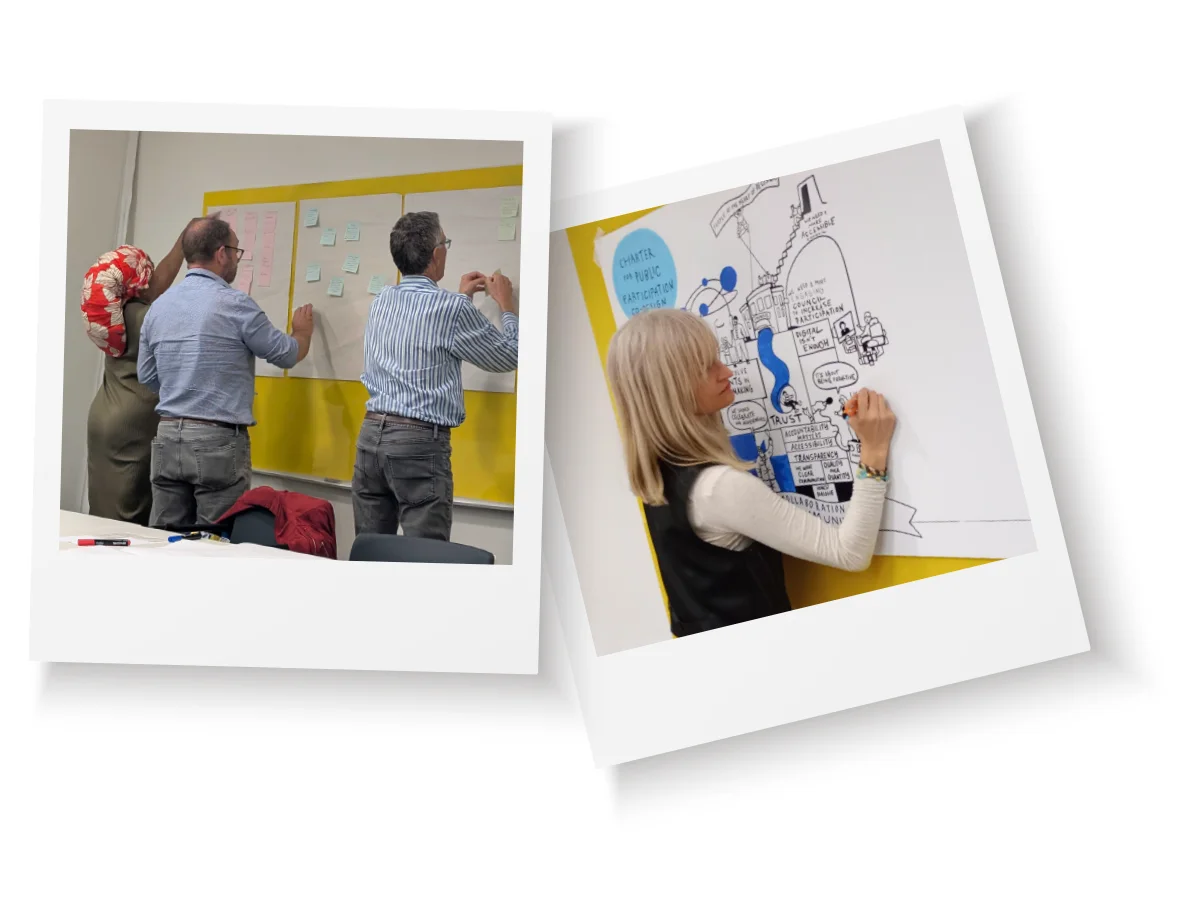
The council says it will co-design a Resident Pact with a smaller, representative group of residents now that the plan is out: a short, plain-language agreement on what residents can expect from the council and what it can reasonably ask in return. In the consultation, 67 per cent said it was reasonable to ask residents to tell the council when something is wrong or working, and 46 per cent said taking part in decisions. Residents also said community action “must not substitute for the council’s core responsibilities”.
The plan also sets baselines from the 2026 Resident Survey that the council says it will be judged against: 87 per cent trust the council, 90 per cent are satisfied with the way it runs things, 80 per cent think it gives value for money, and 62 per cent feel they can influence local decisions. A full set of indicators and targets will follow in a performance framework, and the council will publish a progress report every year.
One strand is already open for comment. The council’s survey on a new Economy Plan, covering jobs, training, business support and high streets, runs until 6 December 2026. (RBKC consultation hub)
What it means for you
- Bins: twice-weekly collections continue. Check your days on our Kensington bin collection days page.
- Council tax: the plan says rises are a last resort, but it does not rule them out. Our council tax bands page has this year’s charges.
- Reporting problems: serious potholes, offensive graffiti and fly-tips carry a 24-hour target from the time you report them. The promised app has no launch date in the plan.
- Services: expect some to shrink. The plan says the council will do less in some areas; the detail will come through budget decisions over the next four years.
The full plan is on the council’s website, with a PDF version.
Have your say